Commercial
Multifamily Owners Face $757B Maturity Wall With Rates Doubled and Values Down 20%
By Real Estate Wire Staff, . Real Estate Wire.
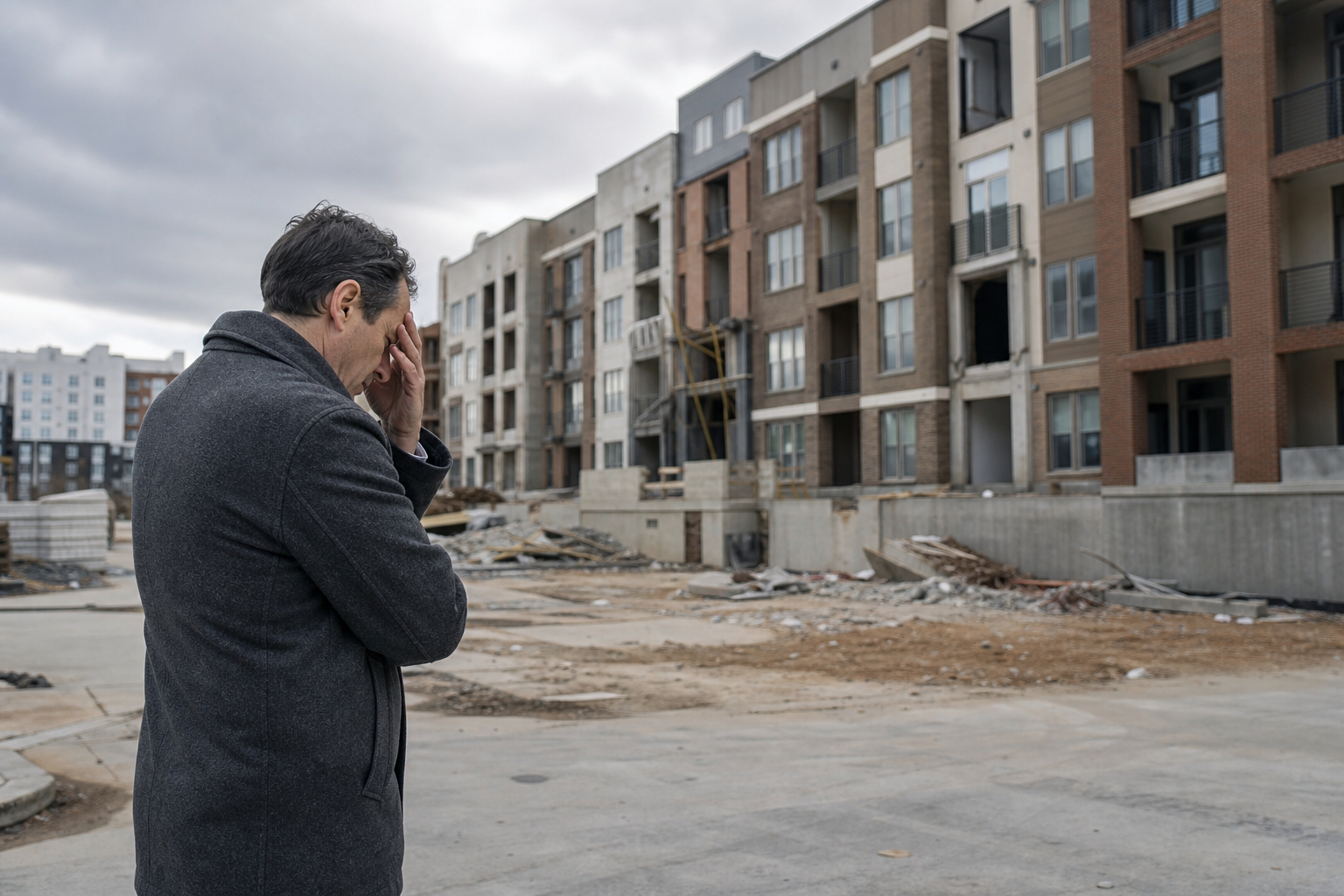
Propmodo reported this week that apartment owners must work through $757 billion in loan maturities between now and 2028, with the Mortgage Bankers Association putting $300 billion of that total in 2026 alone. Last year's maturity volume of $310 billion was already a sector record. The core problem is straightforward: owners who locked in financing at roughly 3% during the 2020 and 2021 buying surge now face refinancing at rates near 6%, which roughly doubles the cost of carrying the debt on assets that have since lost value.
The stress is showing up in the data. Delinquency rates on multifamily loans inside commercial mortgage-backed securities were 1% in October 2023 and have climbed to 7.1% this year, according to Morgan Stanley figures cited by Propmodo, the sharpest rise among major property types. Trepp data, also cited by Propmodo, puts about 3% of this year's maturing loans that cannot be extended into some category of distress, the highest share in five years.
The names attached to the defaults are notable. Blackstone, one of the largest real estate investors in the world, defaulted on a $90 million loan tied to a Dallas apartment building it acquired in 2021. Syndicator S2 Capital has run up $400 million of defaults spread across its Sunbelt portfolio, according to Propmodo. TruAmerica Multifamily Investments chief executive Bob Hart told Propmodo he is weighing whether to sell a property in Raleigh, North Carolina rather than refinance from 3.5% up to 6%.
Lenders spent years extending maturities on the expectation that rent growth would recover and the Federal Reserve would ease rates. That patience appears to be running out. Propmodo reports that creditors are now pushing borrowers to sell, recapitalize, or return the keys.
Apartment valuations are off by more than 20% against the 2022 peak, and buyers of distressed property are reportedly picking up foreclosed assets at roughly 40% discounts, according to Propmodo. That gap between peak valuations and current clearing prices is what makes the refinancing math so difficult: owners cannot simply roll the debt because the asset no longer supports the same loan amount at the new rate.
At the institutional end of the market, AvalonBay Communities and Equity Residential announced a $69 billion merger in May, with both companies citing a desire to reduce reliance on expensive debt and fund more activity from internal cash flow, Propmodo reported. That strategic pivot, two of the largest publicly traded apartment landlords pulling back from leverage, signals how broadly the rate environment has changed the calculus even for well-capitalized operators.
Developers have responded by pulling back on new construction and redirecting capital toward distressed acquisitions. The Bureau of Labor Statistics reported that rent of a primary residence was up 2.7% year on year as of August 2026, running below the overall consumer price inflation rate of 3.4% for the same period. That gap matters here: if rents are not keeping pace with broader inflation, owners facing higher debt costs have limited ability to close the gap through rent increases alone, which makes the refinancing math harder still.
The tenant side of this is not clean either. Propmodo noted that some renters have seen rents raised or maintenance deferred while landlords try to service their debt, with the Tenant Union Federation organizing rent strikes in response.
What the reporting does not yet establish is how lenders themselves are reserving against this exposure, which institutions hold the heaviest concentrations of the maturing debt, or whether any regulatory response is under consideration. The $300 billion figure for 2026 alone suggests the pressure is not close to peaking, and the spread between distressed sale prices and peak valuations means that even forced sales may not fully clear lender books. The harder question, still open, is whether the buyers now acquiring at 40% discounts are pricing in a genuine recovery or simply the next round of pain.
Source: https://propmodo.com/multifamily-maturity-wall-forces-owners-to-choose-between-losses-and-lenders/