Commercial
Eagle Hills Targets $12B Maldives Island in Largest-Ever FDI for the Country
By Real Estate Wire Staff, . Real Estate Wire.
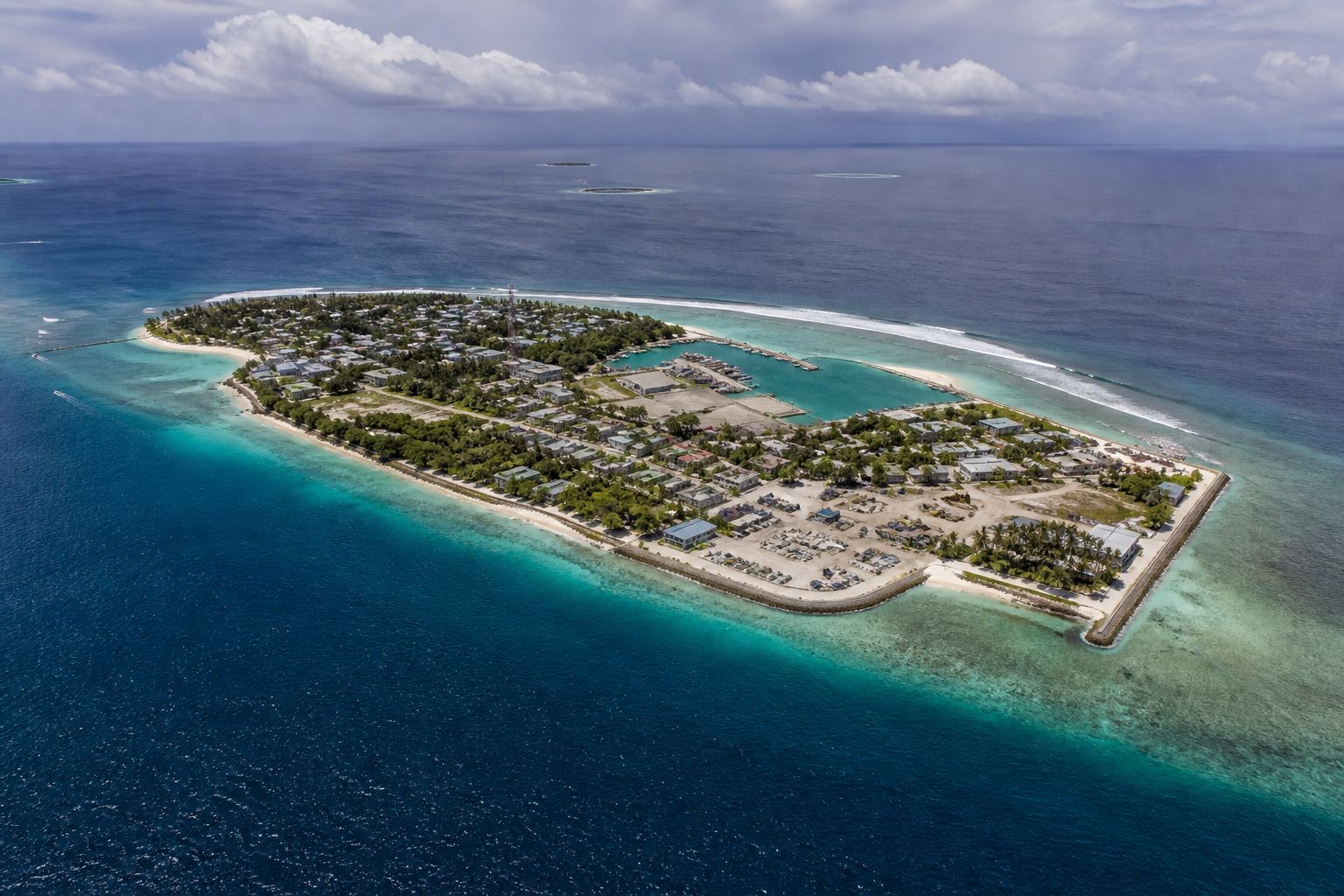
Propmodo reports that Eagle Hills, a developer based in Abu Dhabi and led by Mohamed Alabbar, has announced plans for a mixed-use, $12 billion island development in the Maldives, on a site sitting roughly 20 minutes from Malé, the capital. Alabbar, who also runs Emaar Properties of Dubai, said Emaar might take part in the venture alongside Eagle Hills.
The project, called Ras Malé, would cover 5.2 million square meters, with thousands of residential units plus hotels and resorts, retail space, schools and clinics, a marina and a water park laid out across five districts. Propmodo reports that the Maldivian government has described the full multi-phase program as a $20 billion undertaking, with Abdulla Muththalib, the country's Minister of Infrastructure, Housing and Urban Development, projecting that it could draw more than a million additional visitors each year and produce $2 billion in annual tourism revenue. The government contributed land in return for a share of the profits, and Eagle Hills committed to delivering 5,000 units of social housing in stage one. Propmodo puts the projected job creation at more than 40,000 positions, of which 15,000 would be permanent.
The ambition behind Ras Malé is a structural shift in how the Maldives monetizes tourism. Instead of the single-resort, short-stay pattern the archipelago has long depended on, Eagle Hills is aiming at wealthy retirees and families out of Europe, India and the Gulf who might stay for weeks or months at a time. That is a meaningful bet on a different kind of visitor, and it depends heavily on whether the infrastructure can support extended stays at scale.
The backdrop for this announcement is the pressure Gulf developers are facing at home. Propmodo reports that developers in Dubai and Abu Dhabi amassed sizable capital reserves over a property boom lasting five years, but that geopolitical disruption tied to U.S.-Israeli ties with Iran, plus the Strait of Hormuz being closed, has since weakened demand across the emirates and driven construction costs up. Alabbar acknowledged a decline in Dubai property sales, though he said existing project backlogs, margins and collections continue to be strong enough to keep operations going.
Eagle Hills and Emaar had already been moving capital abroad before the current disruption. Propmodo notes that Eagle Hills committed $6 billion to a development in Georgia last year, and that Emaar has active projects in Egypt and India. The Maldives announcement extends that pattern significantly, both in scale and in the novelty of the destination.
The strategic logic is straightforward: developers sitting on capital and facing margin pressure at home are looking for markets where that capital can work harder. The Maldives offers a government willing to contribute land, a tourism brand that already attracts high-net-worth visitors, and a development story with no obvious regional competitor at this scale. The harder question is execution. A project of this size in an island nation with limited construction infrastructure will face logistical and cost challenges that phasing alone will not resolve. Alabbar said phasing will match demand, but no timeline or delivery schedule was reported by Propmodo.
What the reporting does not establish is how much of the $12 billion Eagle Hills has committed versus what remains contingent on Emaar's participation or future financing. The distinction matters for anyone assessing whether this is a funded project or an announced intention.
Source: https://propmodo.com/abu-dhabis-eagle-hills-plans-record-12-billion-maldives-mixed-use-island/