Residential
Deferred Fire Safety Upgrades Cost Landlords Far More Than the Fixes They Skipped
By Real Estate Wire Staff, . Real Estate Wire.
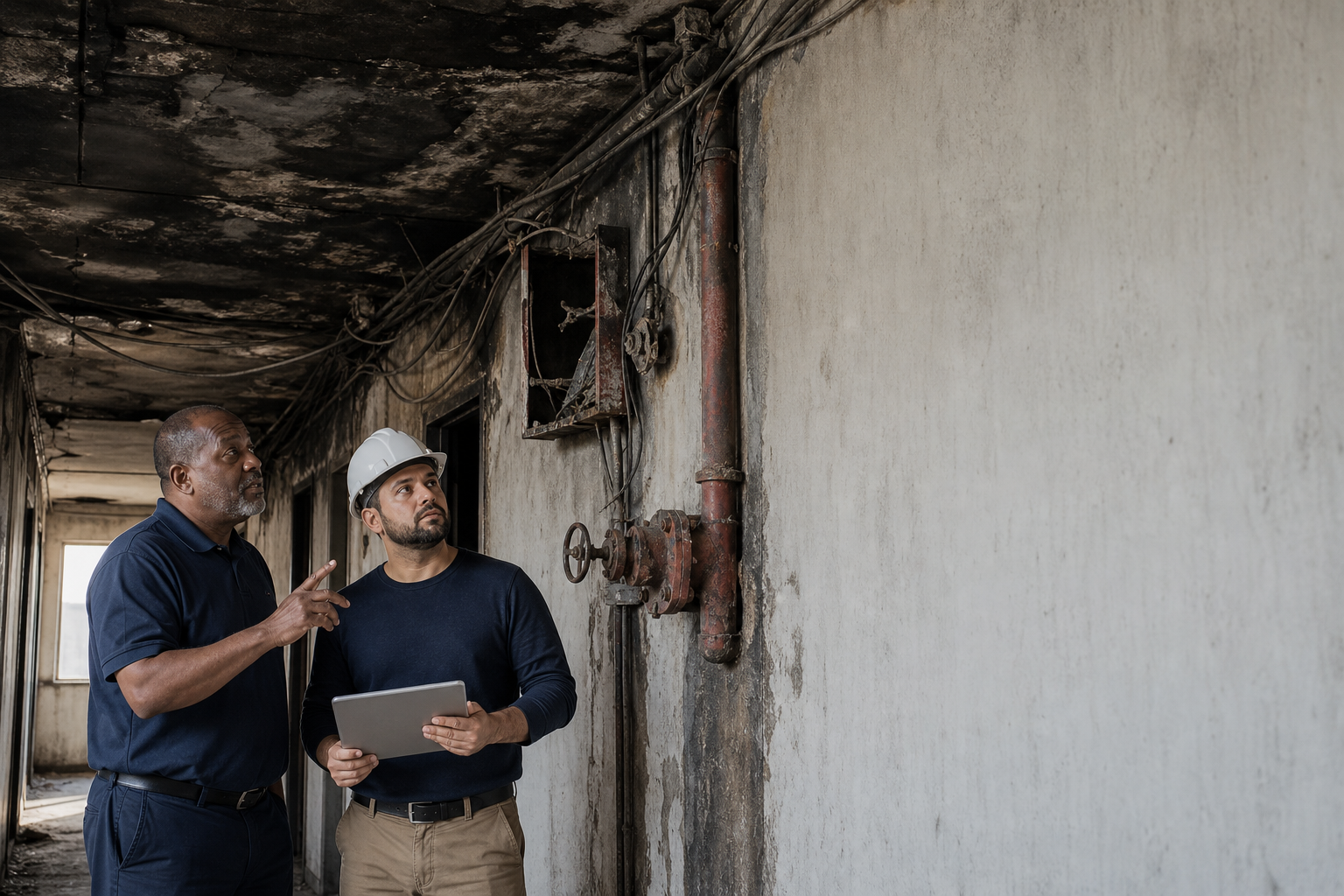
Apartment fires are a daily reality in the United States, with more than 76,000 breaking out in multi-family buildings during 2024 alone, according to the National Fire Protection Association. Those fires killed 340 people and left nearly 2,300 injured. That works out to more than 200 apartment fires every single day.
The raw count has fallen sharply over decades, the NFPA puts the 2024 figure roughly 47% below 1980 levels, but fewer fires have not meant fewer deaths or lower economic losses. Two forces are driving that gap.
Why modern fires are deadlier
Today's furnishings, carpets, mattresses and couches in particular, are made from petroleum-based synthetic materials that burn faster and hotter than the wood, cotton and wool they replaced. Data from the US Fire Administration shows that a fire now reaches flashover, the point at which an entire room ignites simultaneously, in three to five minutes. Three decades ago, residents had 15 to 17 minutes to escape, a difference of roughly 75%.
Lithium-ion batteries are adding a separate hazard. When an e-bike or e-scooter battery fails, a process called thermal runaway can push its temperature from 212 degrees to 1,800 degrees in a single second, according to researchers at Clemson University. For a landlord managing a building where residents store these devices in hallways or units, that is a liability question as much as a safety one.
What the lawsuits look like
HousingWire details two recent US cases that show how quickly fire liability becomes a financial event.
In Atlanta, a 2023 fire destroyed The Reserve at LaVista Walk, a 284-unit complex housing more than 220 residents. A class action followed, with plaintiffs alleging that management had received repeated complaints about a malfunctioning smoke alarm and done nothing, leaving residents unable to tell whether the alarm signaling the actual fire was real. The owners settled for $8.45 million.
In Portland, a July 2021 fire at the Heidi Manor Apartments killed three people and injured a fourth after fireworks ignited trash in a dumpster placed too close to the wooden structure. Plaintiffs alleged a violation of Portland's fire code. The settlement reached $6 million.
Both cases share the same basic structure: a known hazard, a deferred fix, and a settlement that dwarfs whatever the repair would have cost.
The Grenfell benchmark
The most extreme version of that equation is the 2017 Grenfell Tower fire in London's North Kensington neighborhood. The 24-story building burned for 60 hours. Seventy-two people died and 74 were injured. Property damage costs reached an estimated £1.2 billion, roughly $1.5 billion.
The piece in HousingWire quotes The Guardian's finding that the economic damage alone came to "4,000 times the amount that was saved by replacing fire-retardant cladding with a cheaper combustible alternative." This summer, Scotland Yard announced that 54 individuals and 20 companies face criminal referrals, with charges expected around the fire's tenth anniversary. Those implicated include the cladding and insulation manufacturers, the main design-build contractor, the architect, the fire safety consultant and the tenant management organization.
The column was written by Lawrence J. Luppi, a partner at Coffey Modica LLP who represents insurers, property owners and managing agents in fire and explosion matters. HousingWire notes it does not necessarily reflect the editorial department's views.
What landlords and underwriters should take from this
The NFPA puts total property damage from house fires in 2024 at $19 billion. That figure sits behind every underwriting decision on a multi-family building, and the Grenfell timeline, criminal referrals arriving a decade after the event, is a reminder that liability does not expire when the smoke clears.
For owners, the practical question is straightforward: which deferred maintenance items, a boiler, a sprinkler system, a fire alarm, represent the largest gap between repair cost and potential exposure? For underwriters, the question is whether the properties they are covering have documented inspection histories and whether contractors and materials used in any recent refurbishment meet current standards. A settlement in the single-digit millions is the optimistic outcome when those answers are unclear.
Source: https://www.housingwire.com/articles/grenfell-fire-landlord-liability/
Real Estate Wire provides news and information, not real estate, legal, or financial advice. Consult a qualified professional about your specific needs.