Residential
Townhouse Construction Falls 14% as Affordability Pressures Weigh on Demand
By Real Estate Wire Staff, . Real Estate Wire.
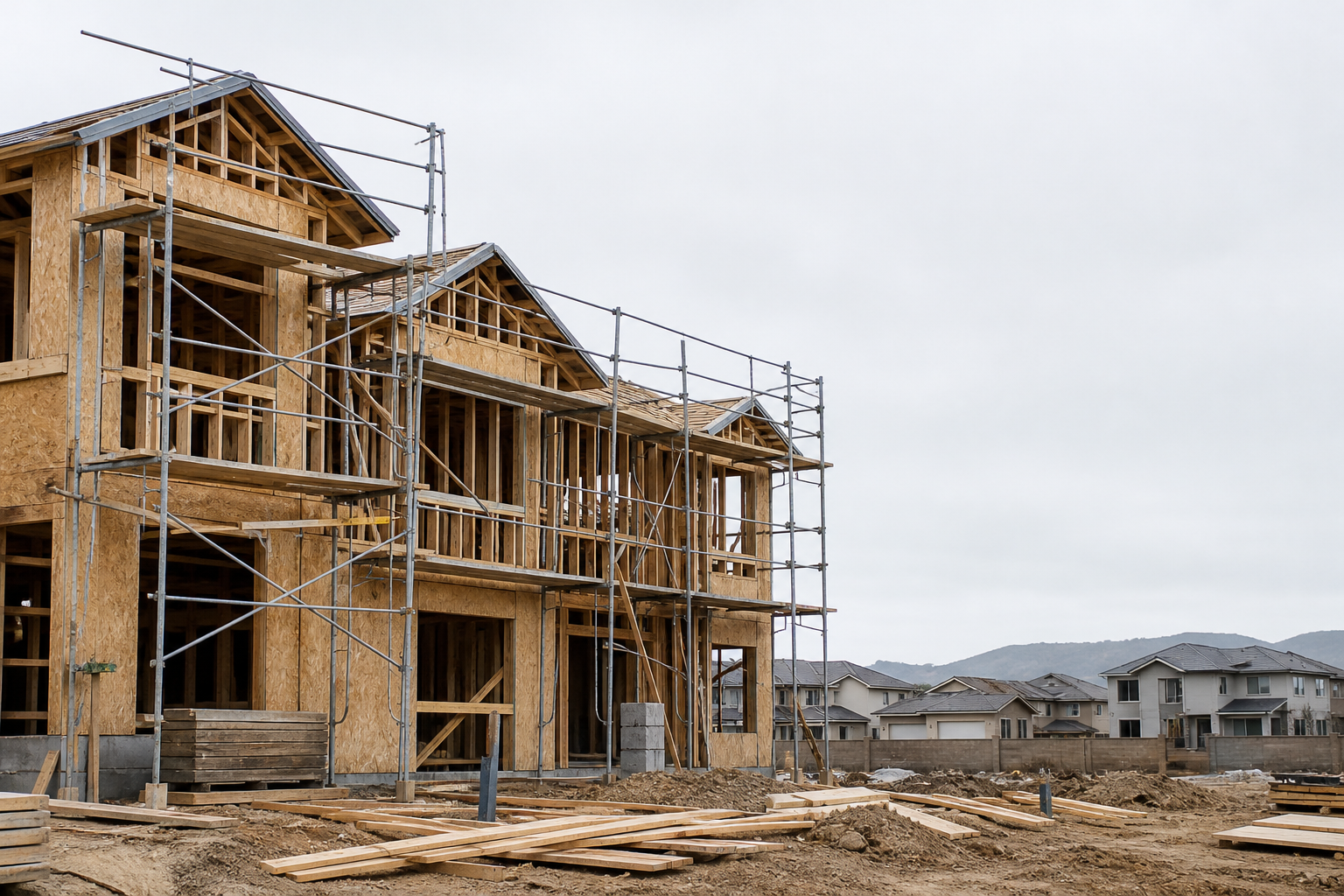
Townhouse construction is contracting at a meaningful pace, with new data showing the pullback is broad-based rather than a one-quarter blip.
According to NAHB Eye on Housing, which analyzed Census Bureau data on housing starts and completions by purpose and design, single-family attached starts came in at 40,000 units in the third quarter of 2026, down 14% from the same period a year earlier. Stretched over the last four quarters, townhouse starts totaled 154,000 homes, compared with 179,000 in the prior four-quarter period, a decline of 13%.
What the numbers show
Townhouses made up 17% of all single-family housing starts in the third quarter. That share matters because it had been climbing for decades: on a one-year moving average basis, the market share peaked at 18.7% in the third quarter of 2025, an all-time high. It has since slipped back to 17%.
For context, the previous peak over the prior two decades was 14.6%, set in the first quarter of 2008 on the same moving-average basis, after a steady climb that began in the early 1990s. The current retreat is coming off a much higher base, which means the segment is still historically elevated even as it pulls back.
NAHB attributes the decline to housing affordability pressures weighing on homebuyer demand, particularly in larger metropolitan markets.
What it means for builders and investors
The 14% single-quarter drop is the kind of number that forces a reassessment of pipeline decisions. Builders who expanded townhouse programs during the 2024-2025 run-up are now facing softer demand in the metro markets where those projects are concentrated.
For investors in the for-sale attached segment, the share pullback from 18.7% to 17% is not catastrophic, but the direction matters more than the level. A segment that was gaining share for roughly three decades has now reversed, and the reversal is happening while affordability remains constrained.
NAHB's own read is that long-run prospects remain positive, citing growing buyer interest in medium-density neighborhoods with walkable environments. The association's framing: "Where it can be zoned, it can be built." That is a supply-side argument about the potential for attached housing where local rules allow it, and NAHB presents it as a multi-year case rather than a near-term one.
What to watch
The near-term question is whether the 13% four-quarter decline stabilizes or deepens into 2027. NAHB points to affordability as the key pressure on demand. The zoning point NAHB raises is also worth tracking locally: markets that have loosened attached-housing zoning are, in NAHB's view, better positioned to expand supply when demand recovers.
Source: https://eyeonhousing.org/2026/11/townhouse-construction-declining/
Real Estate Wire provides news and information, not real estate, legal, or financial advice. Consult a qualified professional about your specific needs.