Residential
Villa Hires Century Communities Veteran to Scale Manufactured Homes and ADUs
By Real Estate Wire Staff, . Real Estate Wire.
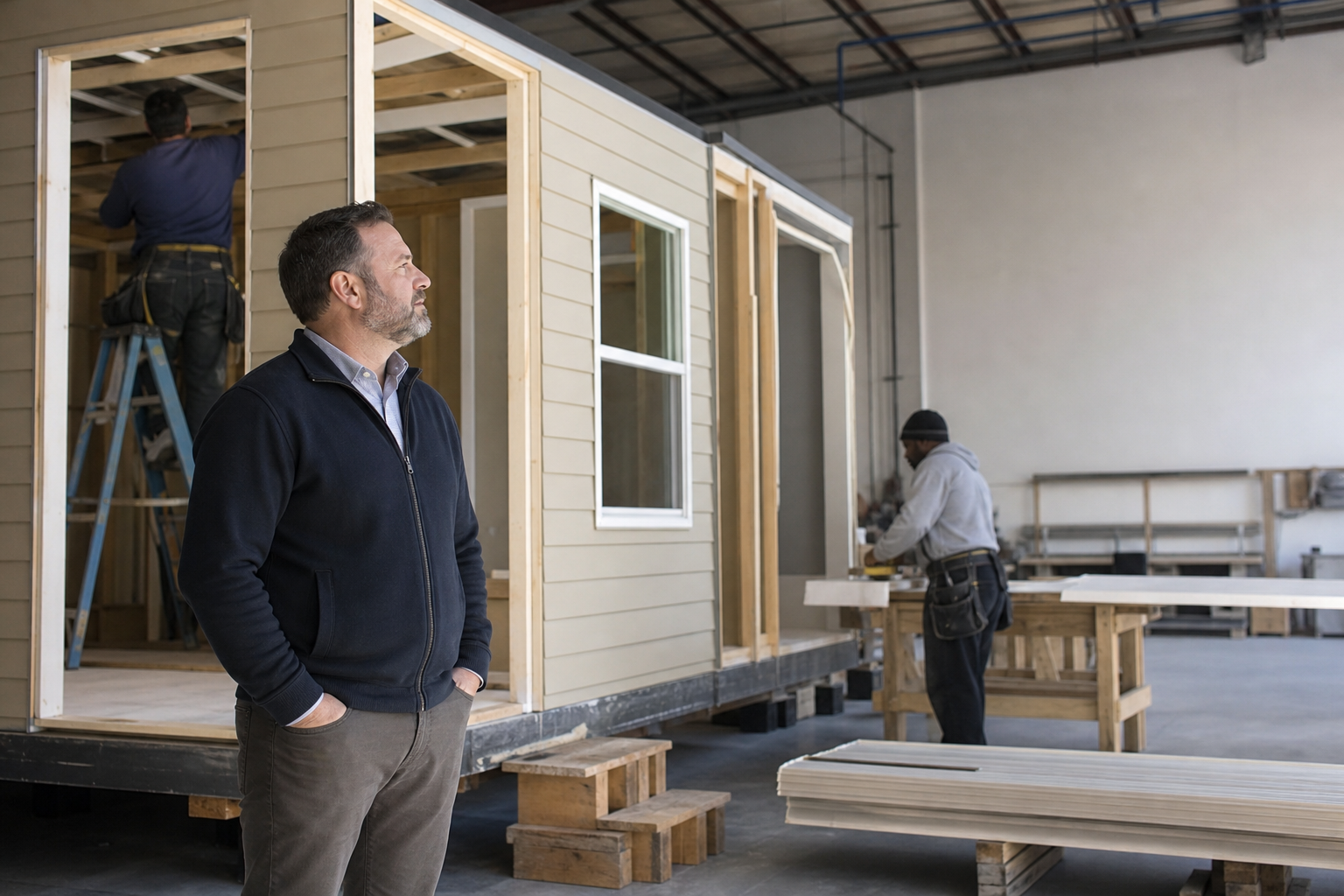
Villa has named David Messenger, who spent a decade as chief financial officer at Century Communities, as its new chief executive, according to HousingWire. The appointment is a direct bet on two of housing's most-discussed affordability levers: manufactured homes and accessory dwelling units, known as ADUs, which are secondary units added to existing residential lots or multifamily properties.
What Villa is building
Founded in 2019, Villa has delivered more than 425 homes across three lines: manufactured single-family communities, ADUs placed on individual lots, and ADUs built within multifamily properties. The company is currently active on a 25-home project in Santa Rosa, California, 14 duplexes in Westminster, Colorado, and a rebuilding effort for households displaced by the 2025 Eaton Fire in Altadena, California.
The next phase is larger. Messenger told HousingWire he wants to build communities of up to around 100 lots, and he is explicit about how Villa plans to get there: buy finished, entitled land rather than develop it. "I don't think that Villa is going to be in the game of developing land, and we're not looking to take on entitlement risk," he said. The strategy is to offer land developers a reliable buyer once their sites are ready, giving both sides a cleaner transaction.
On the ADU side, Messenger sees demand growing from two directions. California and Colorado homeowners are adding units for rental income, and multifamily operators are increasingly building ADUs on underused portions of their sites. "More and more multifamily operators see [ADUs] as a way to increase their rental income...at a relatively low cost to their overall project," he said.
Why the chassis rule matters
The timing of the hire connects to a regulatory shift. The 21st Century ROAD to Housing Act, signed into law in July, removed a longstanding requirement that manufactured homes be built on a permanent steel chassis. The U.S. Department of Housing and Urban Development is now finalizing how that change takes effect.
For builders like Villa, the practical effect is design flexibility: without the chassis constraint, manufactured homes can be built taller, larger and in configurations that more closely resemble conventional site-built housing. That matters for two reasons. First, it may help the product gain acceptance in communities where zoning rules have historically blocked manufactured housing. Second, multi-story designs make higher-density infill development more economically viable in land-constrained markets, which is exactly where Villa operates.
"As we're evaluating communities, not having a chassis requirement should open up more lots and communities where we can build on," Messenger said.
The production homebuilder playbook applied to offsite
Messenger's pitch to Villa is essentially operational: take what works at a large production builder and apply it to offsite construction. "Having spent 10 years at a production homebuilder, you learn how to establish repeatable processes," he said. "Offsite construction lends itself to that because a significant portion of the home is built in a factory, making the process more predictable."
Villa does not own its factories. It contracts with third-party manufacturers across California, Colorado, Nebraska and New Mexico, which Messenger says gives the company flexibility without capacity risk.
The price point Villa is chasing is meaningful in context. In Santa Rosa, where the company's Acacia Village community is under development, the average home price runs around $705,000, according to the report. Homes at Acacia Village start at $620,000, a gap that is real but still well above what most affordability programs target. Whether manufactured housing at that price point moves the needle for lower-income buyers is a question the current pipeline does not fully answer.
What to watch
The chassis rule change is still being finalized by HUD, so the full design flexibility Messenger is counting on is not yet locked in. The larger question is whether Villa can assemble enough finished, entitled lots at the scale needed to make 100-lot communities viable, particularly in California markets where entitlement timelines remain long regardless of who holds the land when Villa arrives.
Source: https://www.housingwire.com/articles/villas-new-ceo-growth-strategy/
Real Estate Wire provides news and information, not real estate, legal, or financial advice. Consult a qualified professional about your specific needs.