Commercial
Bay Area Multifamily Hits 97.6% Occupancy as AI Demand and Supply Freeze Drive Investor Rush
By Real Estate Wire Staff, . Real Estate Wire.
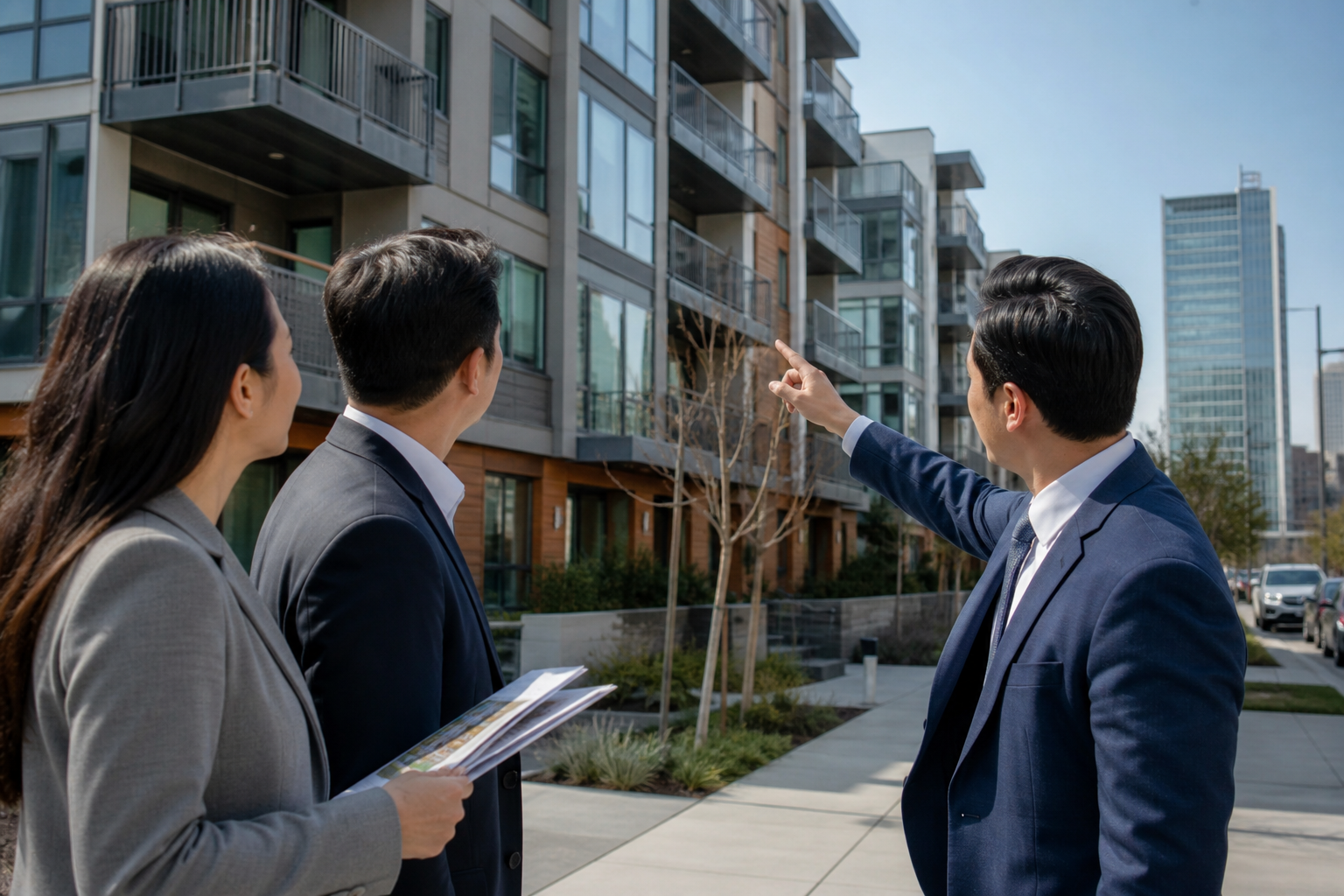
San Francisco multifamily occupancy hit 97.6% in the second quarter of 2026, tied with Honolulu for the highest rate in the country, while San Jose came in at 97.4%, tied for second with New York City and Virginia Beach, Bisnow reported, citing Colliers research. Both metros simultaneously rank in the bottom ten U.S. markets for new apartment units under construction, a combination that is drawing capital from across the investor spectrum.
Effective rents in San Francisco reached $3,938 per month in Q2, up 10.6% year-over-year, while San Jose stood at $3,538, a 6.1% increase from Q2 2025, according to Colliers figures cited by Bisnow. Just 150 new units, representing 0.1% of total San Jose inventory, are projected to come online in 2026.
Deal activity is responding. Bisnow reported 63 multifamily transactions closed in San Francisco in Q2 2026, up from 59 in Q2 2025 and 56 in Q2 2024, with total sales volume of $347M against $285M a year earlier. Notable Q2 transactions cited by Bisnow include Holland Partner Group's $105M acquisition of 218 units near downtown San Jose at $482K per unit, and Bedford Affordable Housing's $87M purchase of 262 units in San Jose at $334K per unit.
In the South Bay, institutional capital was up 20% year-over-year and accounted for roughly 60% of total investor activity for the twelve months ending March 30, according to Marcus & Millichap data cited by Bisnow. Sunnyvale, western San Jose and Campbell drew the most institutional transactions; private investors were more active in downtown and south San Jose.
"It's all types of investors," Dustin Dolby, vice chair of multifamily at Colliers' San Francisco office, told Bisnow. "You're seeing pension funds, real estate companies, private investors and family offices. It's not one sector or one investor profile that's looking at the market. It's the whole investment community."
The supply constraint is structural rather than cyclical. Bisnow noted that the postpandemic apartment construction wave that flooded Sun Belt markets with inventory never reached the Bay Area, and the region's lengthy entitlement process makes acquiring existing assets more attractive than building new. David Feinberg, managing partner of San Francisco-based Sack Capital Partners, told Bisnow his firm has acquired six multifamily assets in Bay Area submarkets over the past 18 months, including a recent joint venture with LEM Capital of Philadelphia on a 122-unit value-add garden community in Fremont.
Feinberg attributed the demand surge directly to AI-sector employment growth. "This AI boom is real, and it's having a tangible effect on employment growth, which ties into apartment fundamentals," he told Bisnow. He also pointed to the rent-versus-own gap as a structural floor under demand: average home prices in San Francisco exceed $1.4M and in San Jose top $1.3M, per Zillow data cited by Bisnow, which Feinberg described as the widest rent-to-own spread in the country.
The picture Bisnow presents is internally consistent and the data points reinforce each other, but a few things the reporting does not establish are worth flagging. The AI employment figures driving demand projections are not independently sourced in the piece beyond operator commentary, and the durability of that demand depends on tech hiring holding at current levels. Feinberg himself acknowledged the possibility of "a hiccup in some AI valuations," though he expressed confidence in near-term stability. The reporting also does not address rent control exposure across these submarkets, which is a material variable for underwriting in California.
For investors still on the sidelines, the more relevant question may be entry pricing. Cap rate compression tends to follow occupancy and rent growth with a lag, and at $482K per unit for a San Jose acquisition already closed in Q2, the margin for error on value-add assumptions is narrowing. The absence of new supply through at least 2026 provides a buffer, but that buffer is already priced in.
Source: https://www.bisnow.com/news/san-francisco/multifamily/investors-pile-into-bay-area-apartments